Blog

Listening from the Bottom
Recently, I've taken to writing micro essays to process ideas, test my understanding, and learn through writing. "The Lasting Legacy of the Tuba in Jazz" began as one of those essays. It began with a familiar historical problem. The tuba is often treated as an early jazz bass instrument that disappeared once the string bass became common. That account leaves too much out. The instrument remained active in jazz orchestration, small groups, experimental ensembles, studio work, and the hands of musicians who developed it as a featured improvising voice.
The essay followed the tuba through those settings. It considers the musicians who established the instrument's place in recorded jazz, from early bass players and orchestral specialists to modern soloists. After its initial publication, a reader, Stanislav "Stas" Cheremushkin, often known online by his tubastas YouTube handle, reminded me that Rich Matteson and the euphonium also belonged in the story. He was right. That addition clarified the larger subject. The history concerned a family of low-brass voices whose roles had changed across generations.
Even with that broader frame, one absence became increasingly difficult to ignore. Another reader, Chris Butcher, asked the question directly. Where was the write-up on Tuba Fats himself? He was right as well, and his question named the absence precisely.
The sousaphone received comparatively little attention.
As I worked through it, I realized that I had written, taught, performed, and thought so extensively about New Orleans brass bands and the sousaphone that I had begun to treat that history as background. I was projecting a knowledge that many readers would have no reason to bring with them. Readers helped make that omission visible. The sousaphone and its relationship to New Orleans brass band history needed its own space. That became “The Bass Voice in Motion.”
A second area emerged as well: the wider contemporary low-brass world, where tuba and sousaphone players are working across hip-hop, experimental music, studio recording, television, and international performance. That became “The Contemporary Low-Brass Imagination.”
What began as one short essay became three. The original traces the history of the tuba and euphonium in jazz. The second makes the New Orleans brass band and sousaphone history explicit. The third examines how contemporary musicians have adapted low brass to new ensembles, technologies, and professional settings.
Writing helped me see what I had left implicit. The split gave each history the space it needed.
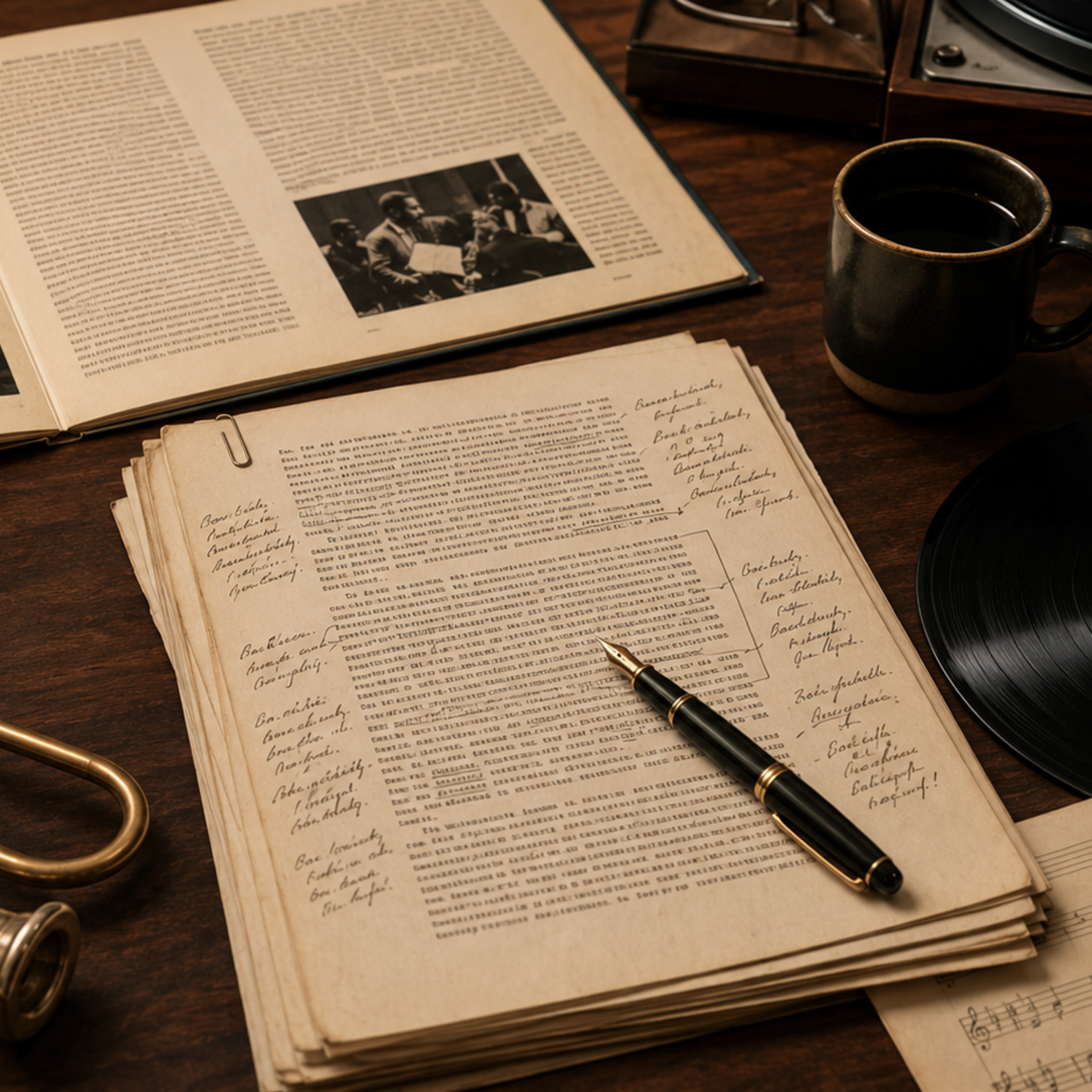
Reading the Record (Copy)
What makes jazz liner notes worth reading?
I’ve been thinking about that while writing notes for a forthcoming jazz-orchestra album I also performed on. This essay looks at Bill Evans, Nat Hentoff, Orrin Keepnews, André Hodeir, Pete Welding, Robin D. G. Kelley, Amiri Baraka, and Cecil Taylor to consider how liner notes can document sessions, preserve musicians’ ideas, explain arrangement and improvisation, and connect recordings to labor, history, and community.
“Reading the Record: Great Liner Notes in Jazz” is now up.
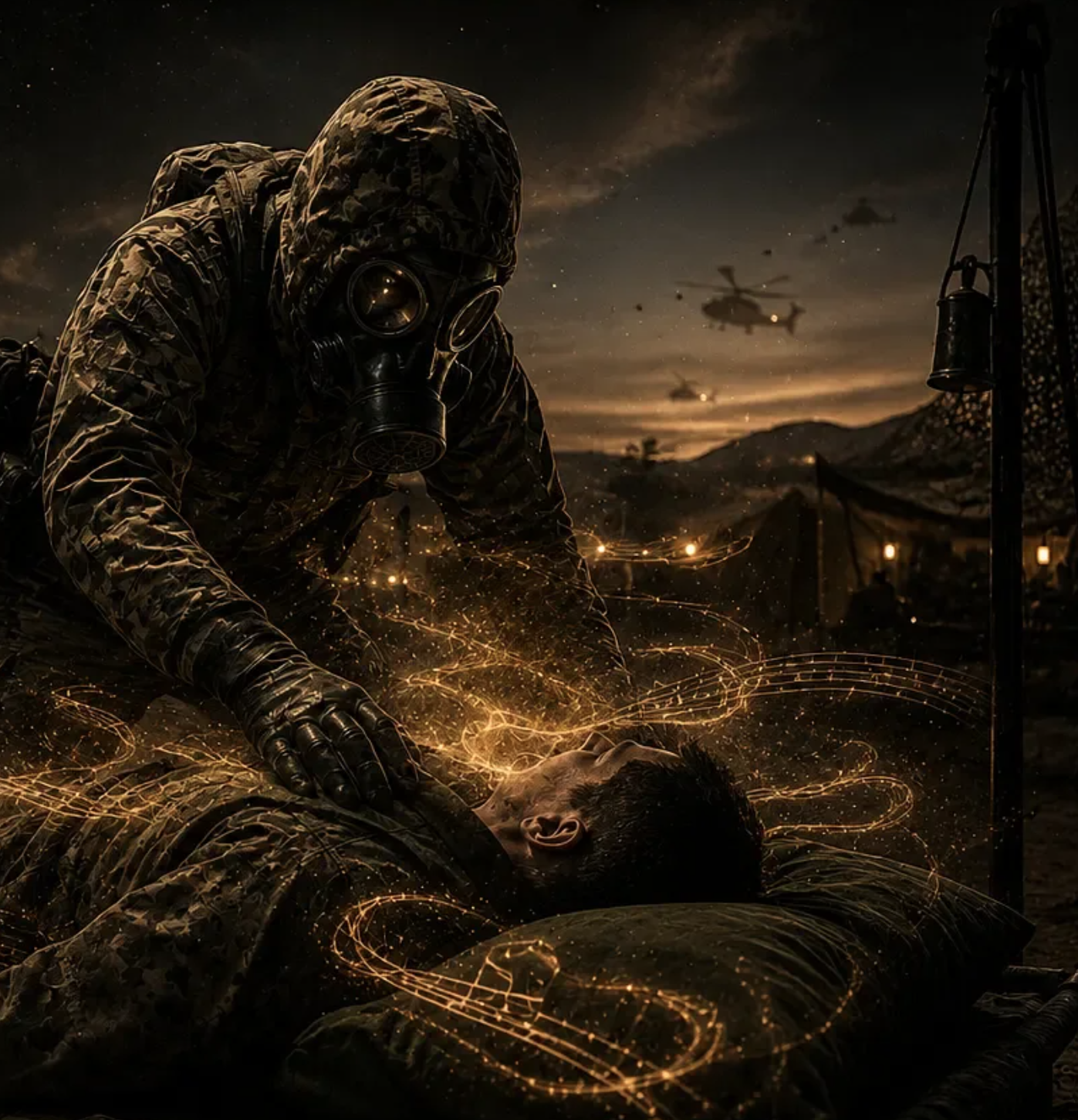
The Music I Heard in the Desert
On the night the world went quiet and the music began
I was sent to the Middle East the day after Christmas.
December 26, 1990. Operation Desert Storm. I was young enough to think I understood what service meant and old enough to know I was supposed to be afraid, even if I had been trained to keep that fear from showing in any ordinary way.
The desert did not feel symbolic then. It was not a metaphor. It was heat and exhaustion. Sand in everything. Machinery. Waiting. Orders. Weapons. Distance. It was the strange compression of time that comes when your body understands danger before your mind has finished forming the thought.
We worked impossible shifts. Eighteen hours on, six hours off, or something close enough to that memory no longer cares about the exact accounting. Fatigue became weather. Sleep was not rest so much as disappearance. The body took what it could get when it could get it.
Outside the tents, we had hollow metal poles hanging like crude bells. If there was a chemical alert, someone was supposed to strike the pole with a clamp or some other piece of metal. The sound would carry through the camp. That was the idea.
It was meant to warn us. It was a bell for the body. A way to tell us that the air itself might have become an enemy.
I have thought about that bell for years, partly because it failed. Or maybe because it worked and I simply did not hear it. I was too deep in sleep and too exhausted after the shift. Somewhere outside, metal struck metal, and the camp moved toward alarm.
I did not wake up to the bell . . .
The Forked Road: Serenity, Courage, Wisdom
Recently, I caught myself turning ambition into pressure through the words I kept choosing.
That realization did not arrive as a grand revelation. It came through ordinary sentences, the kind I say without noticing, the kind that organize a day before the day even begins.
"I have to."
"All I need to do now."
"I should already have this finished."
Those phrases sound practical, responsible, focused. They also carry a hidden command that tightens the body before the task even starts and turns a calendar into a judge.
I know that language well. I know the reflex that treats a delay as evidence, the old training that says push harder, hold longer, do not fold, do not stop, do not retreat. That voice once helped me survive certain rooms. It built discipline and gave me endurance, and I will not pretend it never served me. Lately I have started asking what it costs. Some things in my life have begun to line up, and still some old reflex keeps scanning the room for danger, as if forward motion itself required suspicion.
That reflex speaks in the language of expectation.
In therapy, a simple reframe landed hard. What if I stopped calling them expectations and started calling them ambitions? Expectations press down and ambitions point forward. Expectations say, "You should already have arrived." Ambitions say, "You want to go there." I do not want less ambition. I want a better relationship with ambition.
That led me back to a line I had circled for years without knowing its name, the Serenity Prayer, written by the American theologian Reinhold Niebuhr in the early 1930s. "Grant me the serenity to accept the things I cannot change, courage to change the things I can, and the wisdom to know the difference." Read as a fork in the road, it asks one question. Is this mine to change? If yes, act. If no, release. If I cannot tell, pause long enough for wisdom to enter before pride starts driving.
That last part hit the hardest, because I know courage, or at least one version of it. The Marine-shaped, stand-and-fight, intestinal-fortitude version that treats retreat as weakness. Aristotle would call that a blind giant, all force and no sight, charging fast enough to run straight into a wall.
The full essay walks that road through the mantra I carried, Stoicism, Shantideva, Greek virtue ethics, and Bushido, and the work of learning when strength means action and when strength means release.
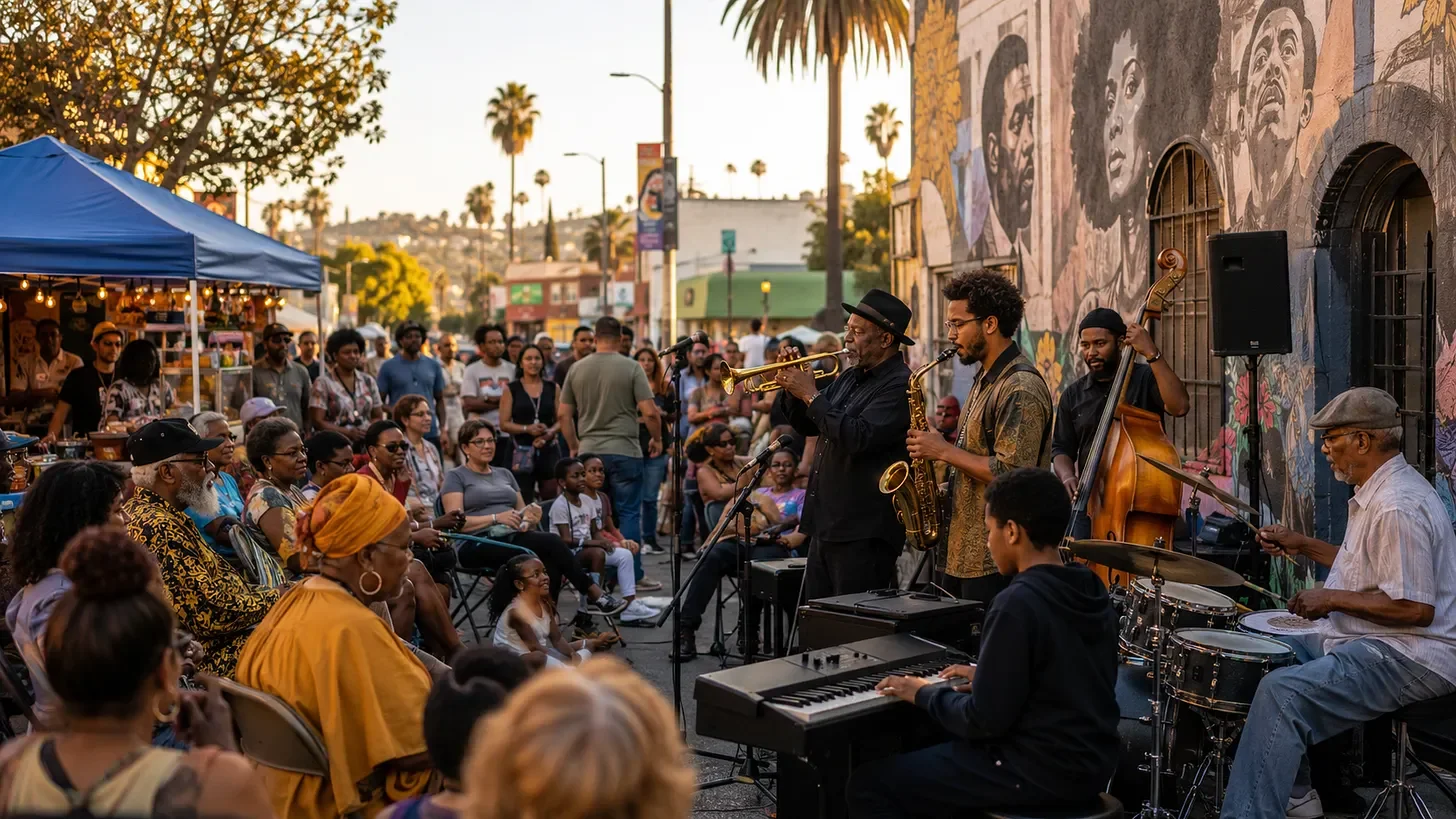
A festival worthy of the city should begin there.The city does not need a jazz festival placed on top of it. It needs one rooted deeply enough to leave something behind.
A poster can sell a festival. It cannot prove that a festival knows the city beneath its feet.
I have played the New Orleans Jazz & Heritage Festival several times, and those stages taught me how a major festival can anchor itself in the culture around it. The lesson for Los Angeles is structural: who shapes the program, where local artists are placed, which histories are made public, and what remains after the last set ends. Los Angeles has its own musical geography, its own cultural workers, and its own histories of jazz in public life.
A serious jazz festival draws a map of the city that hosts it. In New Orleans, that map appears through stages, food booths, craft markets, interviews, neighborhood traditions, education programs, and year-round grants. Visiting stars enter a field already shaped by local musicians, local foodways, local memory, and local cultural labor. Los Angeles now has a chance to build something rooted in its own terms.
Festival culture can easily turn a city into scenery. The beach, skyline, warm night, and headliner can make a festival feel expansive while the city itself stays slightly out of focus.
The inaugural Los Angeles Jazz Festival, founded by Martin Ludlow and billed as the largest Black-owned jazz festival ever, arrives with real promise: park concerts, late-night programming, a Caribbean Street Carnival, a youth jazz camp, a State of Jazz Conference, and beach concerts with major national names. Los Angeles has needed a festival with this level of ambition for a long time.
The Ear That Forgot How to Listen:
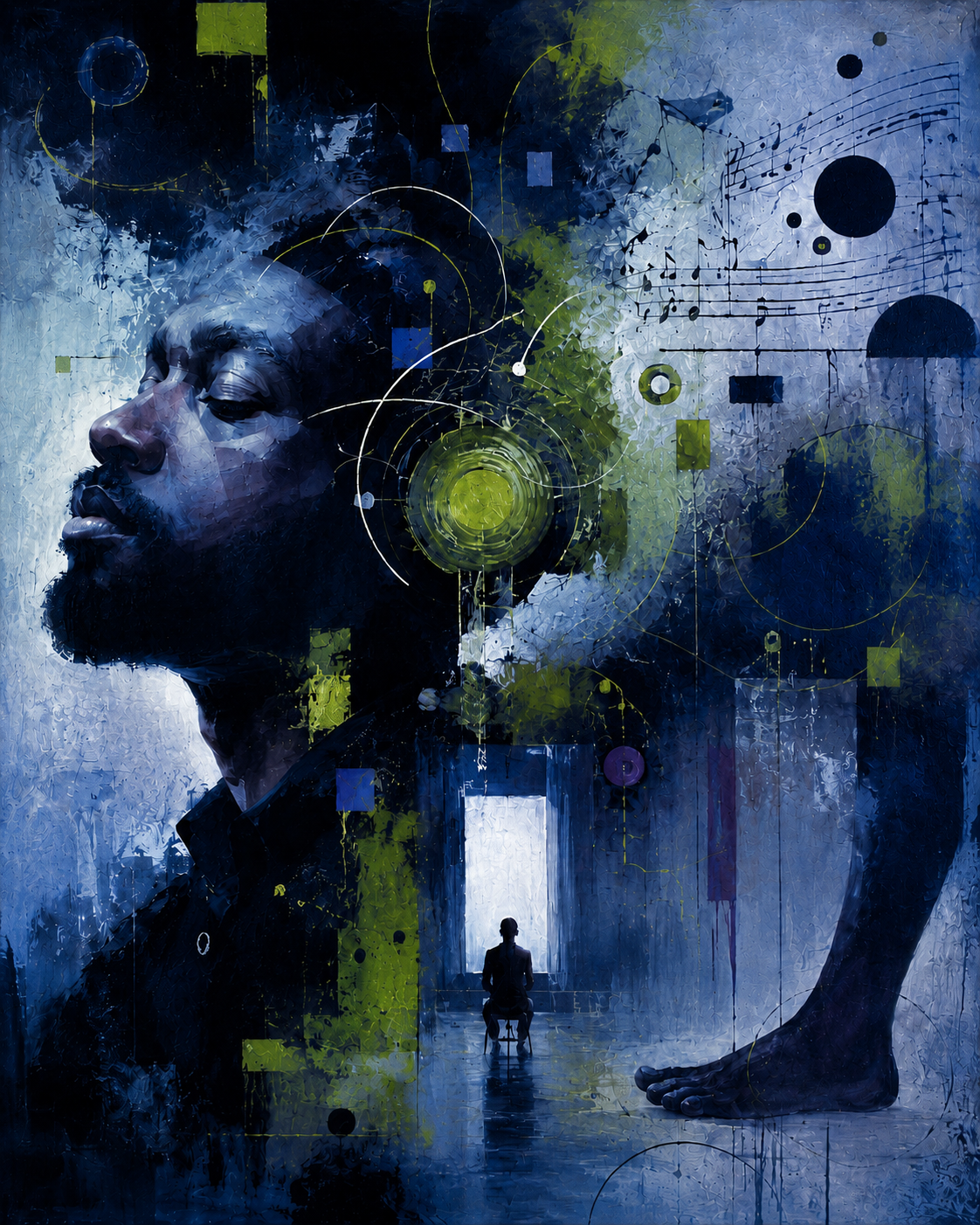
I haven’t listened to music for pleasure in years.
Not really.
The moment a song comes on, something mechanical engages. My brain catalogs the harmony, maps the chord progression, registers the groove, and files the feel of the pocket. I am always, in some background process, working.
I used to tell myself this was just the professional’s occupational hazard. The chef who stops tasting dinner and starts auditing it.
Lately, I’ve started to wonder if that story was too convenient.
I wasn’t just failing to enjoy music. I had lost access to my own interior life. The trained ear and the anxious mind had merged into one efficient, always-on instrument of analysis. Nothing entered without being processed first. Felt second, if at all.
The thing that cracked something open was almost embarrassingly simple:
Put on a song.
Don’t analyze it.
Notice what your body does.
Does your toe tap? Does your chest open or tighten? Does your jaw unclench?
That is the body giving its report before the mind can intercept it.
I’m a musician who teaches at two universities, drives across LA, and has been quietly anxious for longer than I want to admit. I’m writing to figure things out, and this essay is one of those moments.
If you’ve ever made a passion into a profession and felt something slowly leave the room, this one may be for you.

The Legacy of Chuck Connors: Defining the Jazz Bass Trombone
As 2024 draws to a close, I find myself reflecting on the stories that shape our musical heritage. As a musician and scholar, I've often found that the stories behind the music are as powerful as the notes themselves. One of the most resonant stories in jazz history is the legacy of Chuck Connors, bass trombonist with Duke Ellington from 1961. Chuck's contributions to Ellington's orchestra helped shape the sound of jazz bass trombone and left a lasting imprint on how we think about the instrument. Despite its crucial role in providing depth and richness to the trombone section, the bass trombone is often overshadowed by its tenor counterpart, making Connors' work even more significant.[1]
Through David Brubeck's The Jazz Bass Trombone series, an oral history featuring Chuck's wife Betty Connors,[2] and his interview with me, I will provide rare insights into this remarkable musician's life and work as we honor his memory at year's end.

The Artist as Pioneer: How Jazz Musicians Anticipated Modern Physics
Jazz is more than music; it is a framework for exploring the universe through sound. Operating at the intersection of intuition and science, jazz bridges human creativity with the natural laws that physicists and mathematicians strive to formalize. Its evolution reveals not just an artistic legacy, but a profound methodology for understanding complex systems—often decades before science articulated these principles. "The Artist as Pioneer: How Jazz Musicians Anticipated Modern Physics" explores the profound connections between jazz and modern physics, highlighting how jazz musicians intuitively grasped complex scientific principles through their art . . .

Exploring the Vibrant Nightlife of Harlem: A Journey through "A Night-Club Map of Harlem" by E. Simms Campbell
The 1932 "Night-Club Map of Harlem" by acclaimed African American illustrator E. Simms Campbell presents a whimsically detailed Art Deco streetscape depicting the buzzing music venues and hotspots that brought Prohibition-era swing culture to life uptown. This iconic map provides a fascinating glimpse into the vibrant nightlife and cultural scene of Harlem during the Jazz Age and the Harlem Renaissance.
* And there are two sousaphonists highlighted within the work!!

Swinging Words: Jazz Poetry and Its Rich History
Jazz poetry lies at the intersection of two art forms: jazz and poetry. It has given rise to some of the most impactful and culturally significant works of the 20th century. From Langston Hughes to Jayne Cortez and Amiri Baraka to Charles Mingus, artists have explored the connections between jazz and poetry, weaving rich histories and experiences into their work. In this blog, we will delve into jazz poetry, its roots in West African oral traditions, its history as a genre, and examine the life and works of influential artists who have contributed to this intersection, such as Amiri Baraka, Sterling Brown, Hayden Carruth, Jayne Cortez, Michael S. Harper, Jack Kerouac, Yusef Komunyakaa, Nathaniel Mackey, Eugene B. Redmond, Sonia Sanchez, and more.
Join us on a journey through the swinging words of jazz poetry and the rich history that has influenced it.

Discovering Hidden Gems: Jazz-Inspired Solo Tuba Repertoire
Jazz-inspired tuba solo repertoire has become increasingly popular as many composers and performers have delved into the unique sound and versatility of the tuba. If you want to learn more about this literature, click below. There, you can find a curated list of jazz-inspired tuba solos that are sure to captivate your ears and broaden your musical horizons.

The Lasting Legacy of the Tuba in Jazz: Its History, Trailblazing Musicians, and Essential Musical Examples
In the world of jazz, the tuba has carved its own unique path, thanks to the trailblazing musicians who have embraced its rich and distinctive sound. Although the tuba and its close relative, the sousaphone, played a significant role in early New Orleans-style jazz, they have now become more of a specialized musical instrument within the style. If you're looking to delve into its captivating world, here's a (not so) brief history and a curated list of essential jazz tuba tracks that are sure to captivate your ears and expand your musical horizons.
So, grab a cup of coffee or tea, get comfortable, and join us as we delve into the world of this powerful and sometimes gentle giant.

Traditional Jazz: A Brief Style Guide
This guide aims to provide a clear and organized perspective on the various stylistic categories of traditional jazz—a thriving living tradition that continues to this day. It is intended to be a valuable resource and starting place for jazz musicians and educators to develop a comprehensive understanding and proficiency in traditional jazz's diverse range of styles.
I also highlight several prominent women musicians along the way, such as Lil Hardin Armstrong, Lovie Austin, "Sweet Emma" Barrett, Dolly Jones, and others, and provide other interesting contextual information to help "fill out" the history for you.

CNN Juneteenth Celebration Review
CNN's second annual "Juneteenth: A Global Celebration for Freedom" concert occurred on Monday night, June 19, 2023, at Los Angeles' historic outdoor Greek Theatre in Griffith Park. Performers included Big Freedia, Coi Leray, Davido, Jodeci and Mike Phillips, Kirk Franklin, Miguel, Nelly, SWV, Tank, from Tank and the Bangas, and Charlie Wilson, with Oscar-winner Questlove and Adam Blackstone serving as musical directors.
CNN's Juneteenth celebration paid homage to Juneteenth's rich history and cultural significance. In this review, we will explore the highlights and key moments that made this celebration truly unforgettable. From thought-provoking discussions on the importance of Juneteenth to captivating musical performances that left audiences in awe, CNN's event was a powerful testament to the resilience and triumph of the African American community. We will discuss the history of Juneteenth, CNN's coverage of the National Holiday, the overall impact this event had on raising awareness and fostering unity, and even a missed opportunity . . .
Celebrating New Orleans Culture in Los Angeles: The New Orleans Corridor
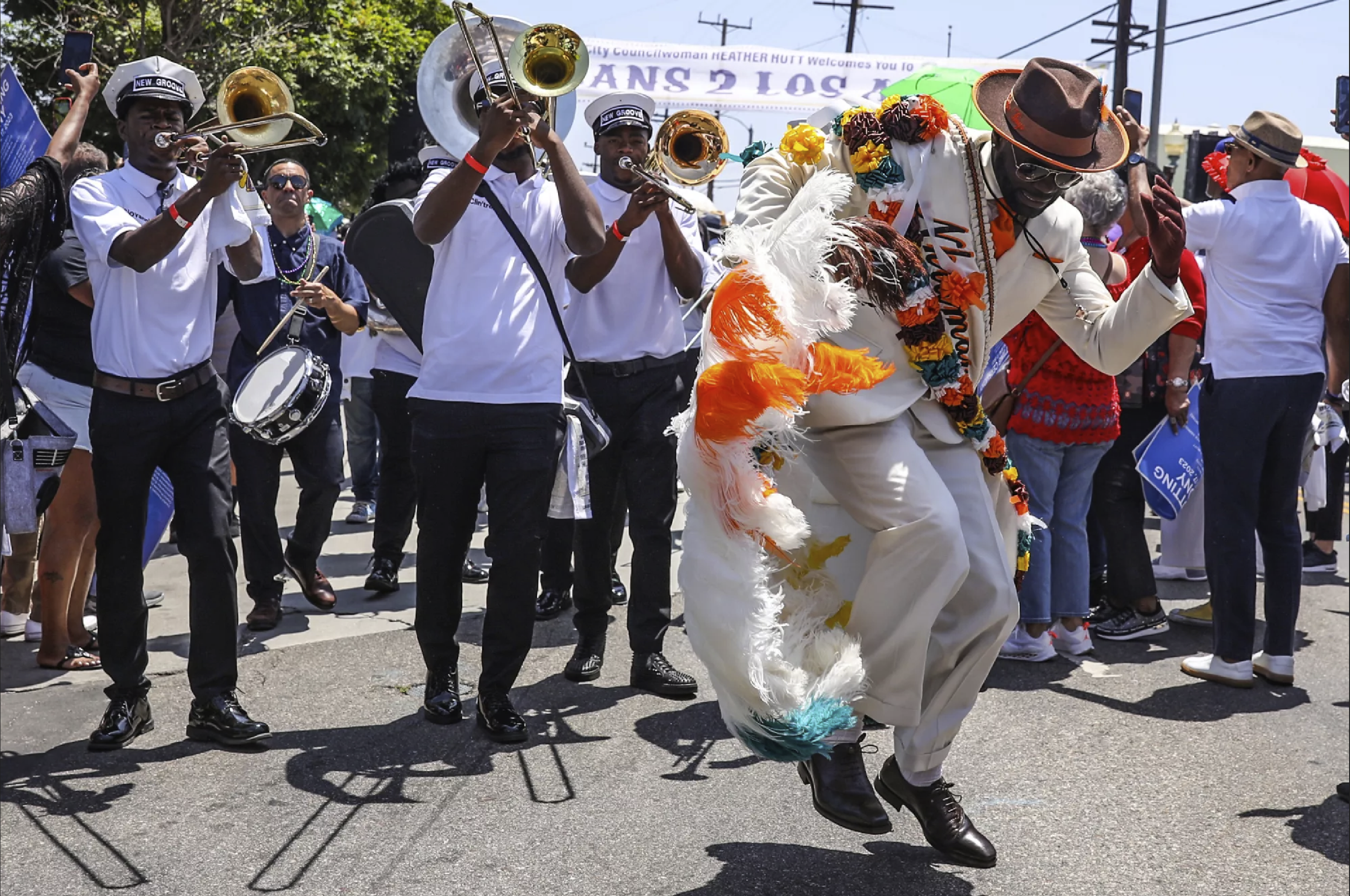
Today, I am excited to share the news of the dedication and ribbon-cutting ceremony for the newly named "New Orleans Corridor." This corridor serves as a testament to the historical migration and enduring legacy of Creole and African American communities who found a new home in Los Angeles during a challenging period in the South.
The Dedication and Ribbon-Cutting Ceremony: On Saturday, June 17, at 11 a.m., Los Angeles City Mayor Karen Bass and Council member Heather Hutt, alongside a delegation led by New Orleans Mayor Latoya Cantrell and the Los Angeles Jazz Festival Foundation, will host a momentous event to honor the newly named New Orleans Corridor. This corridor stretches from . . .

LA Phil’s UPbeat Live! Pre-Concert Talk
On April 28th, I presented LA Phil's Upbeat Live!, pre-concert talk at Walt Disney Concert Hall. Click below to read a transcript or listen to the talk.
* Be on the lookout for a follow-up post where I moderated a guest panel with the composer/musician powerhouse Clarice Assad (whose Boitatá was given a world premiere by the LA Phil on 4/29/2023), violin virtuoso Leila Josefowicz, and conducting phenom, Maestra Elim Chan.
LA Phil’s UPbeat Live! Pre-Concert Talk
On December 4, 2022, I presented LA Phil's Upbeat Live!, pre-concert talk at Walt Disney Concert Hall. Click below to read a transcript or listen to the talk.

REALIZATION OF THE OPERA, QUEENIE PIE
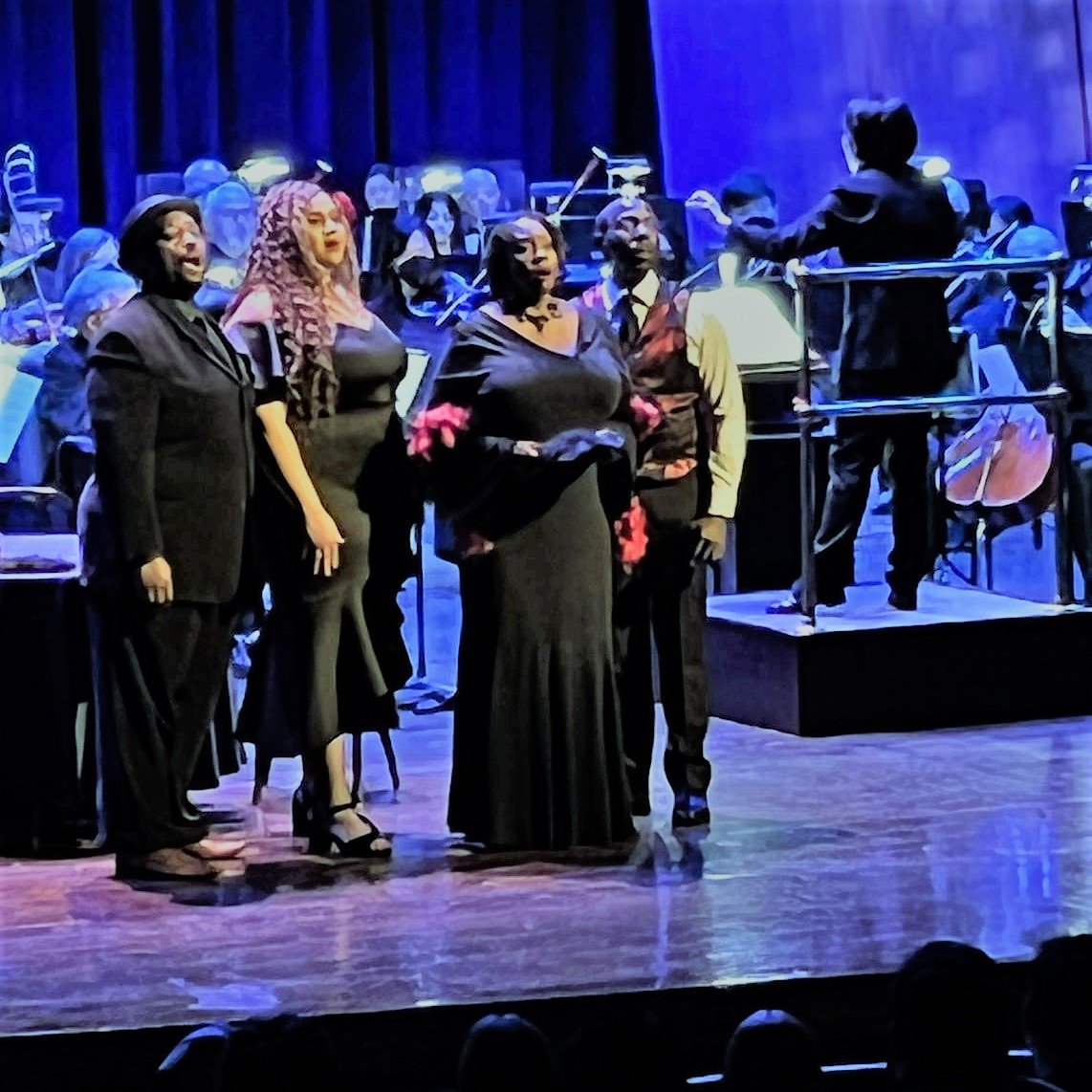
Composing many works sewn into American culture's fabric and vernacular, Edward K. "Duke" Ellington is arguably the most prolific American composer. Of his approximately 3,000 innovative compositions, Queenie Pie—stands alone in style, genre, and breadth. Ellington envisaged the work in the 1930s, shaping and reshaping it throughout his life until his death in May of 1974, though he never completed the work. Throughout the years . . .

Duke Ellington's Queenie Pie
In the early fall of 2007, Marc received a commission to complete Duke Ellington's unfinished opera Queenie Pie by Oakland Opera Theater. Marc’s influence continues today in this much loved production.
- street opera
- Lexington Philharmonic
- Chicago Opera Theater
- Edward K. "Duke" Ellington
- Ellington
- Queenie Pie
- Nucli
- Long Beach Opera
- jazz opera
- Oakland Opera Theater
- opéra comique
- Queens Rule
- Duke
- Queenie Pie Suite
- folk opera
- Betty McGettigan Collection
- Nutcracker Suite
- jazz
- "Realizing the Duke"
- Moon Trio
- Café Olay
- Bolin
- Gaspard Bolin
- University of Kentucky Opera Theater
- jazz-based score
- Holt Fay
- Los Angeles Jazz Orchestra Unlimited
- vocalise
- Kenny Burrell